
A Fine Parent

A Life Skills Blog Exclusively For Parents

  • Academy (Masterclasses)
  • Free Training
  • Articles
  • More
    • About This Site
    • Parenting Book Recommendations
    • Gift Guides
    • Contact

Search Results for: journal

How to Make Sure Your Kids Don’t Grow Up to Be Judgmental People

by Ashley Trexler.
(This article is part of the Building Character series. Get free article updates here.)

Judgemental People Main PosterDoes it bother you when somebody judges you?

I am an unmarried mom.

No, not a single mom, but an intentionally unmarried mom. In a committed relationship with the father of my 2.5 year old daughter for the past 11 years.

While many of my friends are happy for my happiness and have accepted my choice (whether they agree with it or not), every so often, I stumble into people who just cannot mask their disbelief (and often disdain) at the path we’ve chosen.

While I don’t easily get fazed by judgemental people, when someone assumes a moral high ground, it makes me wonder. Am I missing something? Is a traditionally married mother better than an unmarried one?

We have come a long way from branding the letter “A” on an unwed mother’s forehead, and yet, the only socially “acceptable” way to bear children is with a ring on mom’s finger.

Discrimination against unmarried mothers is just one example of why it’s time for a tune-up of our moral compasses. Whether it’s race, religion, sex, money, or education, our beliefs are often out-of-touch with today’s world.

If we’re to raise kind, compassionate kids into moral, empathetic adults, we need to separate judgement from morality.

There’s right and wrong, of course. The basic ten commandments, in whatever dish you prefer them served. Thou shalt not lie, cheat, steal, or harm (well, that’s the condensed version).

But judgement is often hidden under a veil of morality.

The unmarried mom, the breastfeeding preschooler, the attachment parent, the unschooler. In today’s world of 24-hour news channels and instant status updates from friends around the world, is it really our place to judge anymore?

We see lifestyles and events we never would have been exposed to before technology took over, and when the ideas go against our beliefs, attack is too often the first line of the defense.

Technology has brought judgement to the forefront of our collective conscience, in the form of social media shaming, internet trolls, and opinion-based journalism. Judgement is our instinctive response to anything that is different from what we’re used to.

Of course, it’s natural to judge people. It’s instinctive, ingrained in the human species to be wary of people who don’t look the same. Even babies prefer similar looking company.

Let’s explore the grey area between right and wrong, where morals often become judgement, and conformity is our “safe place.”
[Read more…]

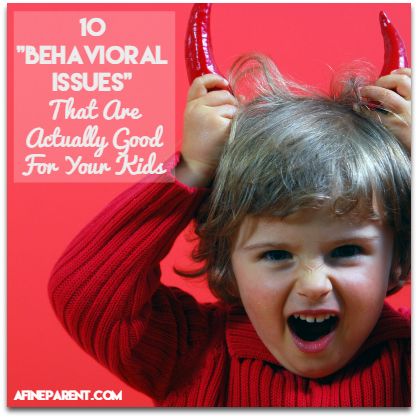
10 “Behavioral Issues” That Are Actually Good For Your Kids

by Viola Tan.
(This article is part of the Emotional Intelligence series. Get free article updates here.)

10 "Behavioral Issues" That Are Actually Good For Your Kids - Main PosterKids are cute. But boy, can they press our buttons.

Aren’t you sometimes awed by how easily your little angels can push you to the edge?

I know I am!

51% of my time as a parent is filled with joy. The other 49% is spent managing my own internal turmoil from interacting with a growing, curious being learning her way to function in the world with nary a trace of concern for the havoc she wreaks in me.

So, it is with a smile on my face (and the mantra “this too shall pass” playing in a loop in my head) that I present to you this list of “behavioral issues” in children that have driven me mad as a mother and an ex-teacher… but I am learning to cope with, because of how instrumental they are in helping a child learn, grow and develop.

#1 Throwing Tantrums

“I want sweets now.”

I’m in the middle of cooking dinner. I’ve had a busy day. I’m tired. My spider senses are starting to tingle with the premonition that I’m going to be part of a train wreck. I muster up the last of my calm control and respond, “In this family, we only have sweets after dinner.”

The incessant demand for sweets soon turns to screaming that has me boiling like the soup I was brewing for the family.

Why do they behave like this?

[Read more…]

5 Easy Ways to Teach Kids Self-Control and Delayed Gratification

by Sarah Ramirez.
(This article is part of the Emotional Intelligence series. Get free article updates here.)

Delayed Gratification: Main PosterLet’s be honest: children sometimes suck at being patient.
I know mine do.

Unfortunately, their lack of patience and self-control can become contagious to us adults, too. I admit that I’m prone to snapping, “Just wait a minute!” when my kids are screaming because I take too long to cut their grapes.

And before I know it, it becomes this vicious cycle—my children’s impatience makes me impatient, which in turn makes them more impatient, until it spirals out of control.

I know I can’t indulge them when they whine instead of waiting quietly – like all parents, I do believe in teaching kids about self-control and delayed gratification.

But, the way I sometimes go about it isn’t quite right.

Instead of expecting 2- and 3-year-olds to magically acquire self-control skills overnight (that would be cool though, wouldn’t it?), I need to model and teach these skills to them.

Marshmallow Test: The Famous Study in Self-Control and Delayed Gratification

Psychologists have studied why some kids seem to excel at demonstrating self-control and delaying gratification, while others struggle for long time now. Have you heard of the famous “marshmallow test” conducted by Walter Mischel and a team of researchers at Stanford University in the late 1960’s and early 1970’s?

One by one, 4-year-old children were presented with a marshmallow and informed that they could either eat a marshmallow now, or wait 15 minutes and receive two marshmallows. Some children gobbled the marshmallow immediately, while others managed to wait the full 15 minutes and receive the reward of a second marshmallow.

[Note from Sumitha: Here is a video of the marshmallow test in action. It’s not from the original study, but captures the kids reactions sooooo well.]

The researchers continued to follow up with the children for the next several decades. They found that the 4-year-olds who had successfully waited for 15 minutes differed in significant ways from the children who couldn’t wait. Over the years, the children who had “passed” the marshmallow test developed the following characteristics:

  • better emotional coping skills
  • higher rates of educational attainment
  • higher SAT scores
  • lower BMI
  • lower divorce rates
  • lower rates of addiction

So, is the lesson that some people are born with better self-control, and that this trait determines their entire life trajectory?

Far from it.

[Read more…]

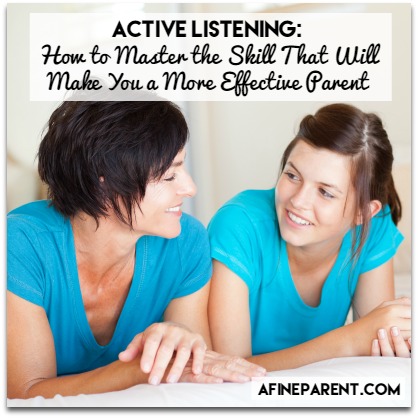
Active Listening: How to Master the Skill That Will Make You a More Effective Parent

by Mindy Carlson.
(This article is part of the Emotional Intelligence series. Get free article updates here.)

Active Listening: Title Poster“YOU NEVER LISTEN TO ME!!!!” 

The scream echoes through the house. As does the slam of the bedroom door.

Have you been there?

It’s an all too familiar family scene. It’s after dinner, homework isn’t even close to being done, and a mild reminder about finishing up a book report has turned into WWIII.

My husband and I look at each other. I have steam coming out of my ears. He looks as if he’s witnessed a car crash.

“I just wish he’d listen to me!” I fume as we straighten the pictures on the walls sent rocking by the shockwaves.

Meanwhile, my son sulks in his room. “I just wish you guys would listen to me!” he vents.

But I AM listening!

Then again, am I really? 

While I was in grad school where I was getting my master’s degree in organization development, I learned that not all listening is created equal. As an organization development (OD) consultant, we practice something called “active listening” as a means to help clients analyze their issues and brainstorm solutions.

I never suspected it then, but I was also learning how to be a more effective parent.

Active listening is a way of fully hearing what the other person is saying. Not just assuming we know what they’re going to say after hearing the first two words and then spending the rest of the time they are talking preparing a perfect response. Instead, active listening focuses on dropping assumptions and working to understand the feelings, motives, and views of the other person.

We don’t quite realize it, but a lot of the time, we as parents, don’t listen actively at all.

How often have you just heard a few words from your kids and jumped in to correct them or offer solutions? How often have you lost patience while kids fumbled to put their complex thoughts and emotions into coherent sentences? How often do you just take a look at the situation and know what needs to be done, without even giving your kids a chance to explain?

Yeah, when I viewed my conversation with my son that evening through the lens of what my professor had told me about active listening, I was quite ashamed.

It was time to try something different.

[Read more…]

How to Forge a Strong Family Using Good Old Family Stories

by Holly Munson.
(This article is part of the Close-Knit Family series. Get free article updates here.)

Family Stories: MainWonk. Bummy-wup. Giffis.

Do you understand any of these words? If so, then congratulations, you are a member of my family.

(If you’re not, FYI: the words mean milk, tuck in for bedtime, and breakfast, respectively.)

It was only when I got married that I realized how unique my family vocabulary is.

Almost daily, I would say something that would be met with a blank stare by my husband. So much so that I had to compile a “family dictionary” translating the distinct words, phrases, and inside jokes frequently referenced by my family.

All families have stories to tell—whether it’s about the origin of an odd word like “giffis,” or about how Grandpa survived a battle in WWII or Grandma battled cancer or Uncle Joe battled raccoons at a family campout.

If you identify, refine, and share stories about your family—triumphs and challenges, quirks and strengths—you can make your family happier and more resilient and close-knit.

Why Family Stories Matter

Your kids may yawn or even roll their eyes at dinnertime when you trot out the story of, say, how you met their mother.

Or they may not get enough of those tall tales and beg you to repeat them every chance they get.

Whatever their response, a growing body of research shows that teaching children about their family history yields just about every benefit a parent could wish for their kids:
[Read more…]

  • « Previous Page
  • 1
  • …
  • 18
  • 19
  • 20
  • 21
  • 22
  • 23
  • Next Page »

Looking for Something Specific? Search Here…

Disclaimers and Such:
Fair Warning: While none of this is professional advice, it is powerful stuff and could potentially change your life!
This site contains affiliate links. Pictures are either Creative Commons licensed or through Fotolia.
Click here to read our terms of use and privacy policy.