
A Fine Parent

A Life Skills Blog Exclusively For Parents

  • Academy (Masterclasses)
  • Free Training
  • Articles
  • More
    • About This Site
    • Parenting Book Recommendations
    • Gift Guides
    • Contact

Search Results for: journal

Teaching Your Kids How to Resolve Conflict Without Fighting

by Tiffany Frye.
(This article is part of the Be Positive series. Get free article updates here.)

How to Resolve Conflict - Main PosterYou know how we have epiphanies as we grow older?

One of the most profound ones for me has been the realization that just because someone doesn’t agree with what you’re saying at the moment doesn’t mean that they don’t agree with you all the time or that they don’t like you anymore.

This simple realization has had a huge impact on my life.

Just recently, my parents and brother were in town for my daughter’s birthday. We were at dinner the night before her party, and my brother hadn’t put his phone down the entire half hour we’d been seated. I made a comment on this – that it’s not pleasant to share a meal with someone that can’t take their eyes away from their smart phones – and he stormed off, refusing to engage in any conversation.

This isn’t the first time he’s had a violent outburst of anger over a small conflict. As his family member, it upsets me that this happens so frequently.

While I tried to make amends over text message (the only way he was willing to communicate), I noticed something in what he was saying – he thought that any criticism of his actions was a criticism of him. He thought that if I respected him, then I would not say anything negative to him. And worst of all, he thought that disagreeing meant we couldn’t be friends.

I started to wonder why this might be. Did we not have good examples of conflict resolution growing up? Did we witness violent outbursts of anger? When I think back on it, I can’t remember my parents ever arguing. And while that may seem like a good thing, I think that may be where the problem lies.

In order to know how to handle conflict in a productive and healthy manner, we need models of healthy conflict resolution. While on one hand fighting and inflamed emotions only create pain, on the other, never seeing adults disagree means our children don’t know how to deal with conflicts at all.

Productive arguing and even conflict is good and can bring us closer when handled well. Among the many things we teach our kids, how to resolve conflict without resorting to either drama or fighting, or just simply sweeping it under the rug to fester, is very important.

Here are some ways we can teach our kids to argue in a way that builds connections, instead of destroying them:
[Read more…]

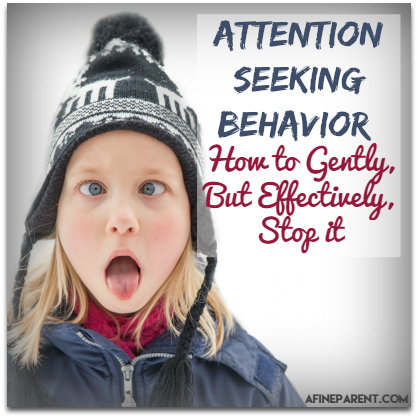
Attention-Seeking Behavior: How to Gently, But Effectively, Stop it

by Jennifer Poindexter.
(This article is part of the Be Positive series. Get free article updates here.)

Attention Seeking Behavior - Main PosterIsn’t it frustrating when your child resorts to attention-seeking behavior and nothing you do seems to snap them out of it?

It’s tiring to be the parent that everyone stares at because your child is constantly drawing attention at the most inopportune moment in the most embarrassing way.

Every day, millions of parents take their children into public settings with no issues at all. Their children stand out for their polite manners and quiet demeanor. These children’s parents are complimented and noticed for all of the right reasons.

Then there are parents that face the constant battle of trying to rein their children in for bringing attention to themselves for all of the wrong reasons.

Do you fall into the latter of the two categories?

What if I told you that you are not alone? That there are others out there that face the same challenges of attention-seeking behavior from their kids every single day?

I know because I was one of them. And still belong to the club some days.

However, having walked through this trial and having mostly broken out of the attention-seeking behavior my son displayed, I can shed some light on a few ways to keep your sanity while doing the same. I hope some of you find this helpful in your own journeys with your kids.

First Things First: Find the “Why?” That Drives the Attention-Seeking Behavior

Trying to find out why your child is seeking attention is always a good starting point. Ask yourself this question: why is my child acting this way?

In my case, my middle son is not my biological son. He is one of my stepchildren that I have adopted to raise as my own.

When we first got custody of him, he was an expert at causing a scene anytime, anywhere. He wanted to be sure everyone saw him, gave him attention, and that all of the attention went to him and not our other two children.

[Read more…]

7 Steps to Make Peace with Your Past to Be the Positive Parent You Want to Be

by Anonymous.
(This article is part of the Be Positive series. Get free article updates here.)

Make Peace With Your Past - Main Title PosterCan you think of the most negative person that you know?
Most likely you can, and the emotions that you’ll experience as you think of them are not pretty.

The relationships that we have with negative people are often complicated and tense. The closer they are in our lives the more difficult our lives become as our desire to be free from negativity becomes entangled with our desire to be close to the one’s that we love.

In my case, the most negative person in my life was my mom.

I still remember the day like it was yesterday. I was 17 years old, excitedly hitting the load and reload button on my laptop. I was too impatient to wait until morning, and so I stayed up late in anticipation for my final grades of my final semester of high school.

Eventually, my grades loaded, and I excitedly read over the marks in each of my classes. Almost all my marks were A’s, except for Chemistry, which was a C+. Knowing that this grade didn’t affect my college application eased my feelings towards these particular results, and so I eagerly ran to tell my mom the good news.

I showed her my marks, letting her know how happy I was to receive mostly A’s for all of my hard work and effort. She sat, silent, barely nodding at me as she read her book. “Mom, Mom, I got all A’s. Well, except for one C+, but that doesn’t count,” I explained hurriedly.

Immediately my mom’s head shot up from her book. “You got a C+? Well, that isn’t very good,” were her first words of our conversation.

And just like that…

All my pride and excitement were instantly deflated. I had failed to make my mother proud, once again. Her simple comment uttered without a second thought created a thick veil of shame around me, one I had been familiar with my entire childhood.

If you are on this site, it’s probably because you want to embrace positivity for yourself and for your family. But, if you’ve experienced negativity in your past, no matter how big or small, you will need to make peace with it before you can move forward on your journey of positive parenting.

It is possible to find healing from the many wounds experienced by adult children who have complicated relationships with their parents.

One of the many benefits of journeying through the pain of your past is that you can finally take control of your future. You can become a parent that effectively disciplines, uses your words in a powerfully positive way for your children, while teaching your children about the importance of building character in their lives.

But how?

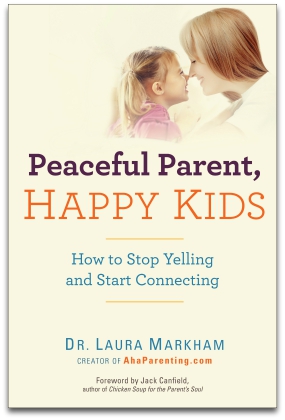
Make Peace With Your Past - Peaceful Parent Happy Kids-Cover-285X420Dr. Laura Markham, the author of Peaceful Parent, Happy Kids, a book that has helped me immensely in my own healing process says:

Positive parenting – sometimes called positive discipline, gentle guidance or loving guidance – is simply guidance that keeps our child on the right path, offered in a positive way that resists any temptation to be punitive. Studies show that’s what helps kids learn consideration and responsibility and makes for happier kids and parents.

Positive parenting teaches our children through respect and compassion that they are valued, regardless of their actions. Positive parenting does not shame, blame, punish, or criticize. Positive parenting does not expect of us perfection, but rather a teachable spirit, for both parent and child. Positive discipline guides children towards the right behavior, not through punishment, but by taking the disobedient behavior as a teachable moment.

If you’re like me, you might be reading this with stars in your eyes.

Positive parenting deserves a place amongst furry pink rabbits and sparkly unicorns.

This can’t be real life, can it?

If all you know of parenting is criticism, shame and fear, then moving past those experiences into positive parenting can feel impossible.

I’ve had those thoughts too. I’d once heard:

A mind, once stretched by a new idea, never regains its original dimensions.
– Oliver Holmes

That has definitely been true in my case. Ever since I found out about positive parenting, I just can’t leave the idea behind. I just can’t go back to parenting in the same critical, punitive way that I was raised.

It can seem quite challenging to make peace with your past and move on to being a positive parent. But it can be done.

Here are 7 steps that helped me in this journey –
[Read more…]

10 Warning Signs That You Might Be a Helicopter Parent (And How to Stop)

by Mindy Carlson.
(This article is part of the Be Positive series. Get free article updates here.)

Helicopter Parent - Warning Signs and How to Stop Isn’t it amazing how you turn out to be exactly the kind of parent you swore you would never become?

Before I had kids, I was pretty sure I wouldn’t ever be a hovering Helicopter Parent. After all, I had grown up running free on my family farm with my brother and cousins, coming home only for lunch and dinner.

But somewhere along the way the wires between trying to be a supportive, positive parent and a hovering, helicopter parent got crossed.

Before I knew it, I’d got a job at the preschool my children attended just so I could keep an eye on them. My son’s teacher started to avoid me at school pick-up because I would “chat” and subtly ask for a progress report or suggestions about what else we could do at home to help him reach his full potential.

Heck, my helicoptering tendencies had sneaked into even the most mundane aspects of our everyday life. At one point, I had a 20 minute safety routine just so the kids could play in the yard.  Complete with sunhats, sunscreen, locking the gates to the fenced (of course) backyard, and putting out three reflective cones into the cul-de-sac so cars would know to drive slowly lest one of the children figure out how to undo the lock and make a break for freedom.

And then I followed 2 feet behind them for the entire 15 minutes we were outdoors.

Sounds a bit familiar? Nobody sets out to be a helicopter parent. But, it kind of creeps on you, doesn’t it? Here are 10 more signs.

You Might Be a Helicopter Parent if…

To be the positive parent you’ve always wanted to be, click here get our FREE mini-course How to Be a Positive Parent.

[Read more…]

How to Be a Positive Parent Even if You Weren’t Raised by One

by Amy Greene.
(This article is part of the Be Positive series. Get free article updates here.)

What is Positive Parenting - Main PosterDo you ever feel doomed to being just like your parents, even though you’re trying hard to do better?

I know how hard it is to try being a positive parent when you’ve been raised in a punitive home.

Like me, you may have grown up in a home where spanking, hitting, yelling, or shaming were the main “discipline techniques.” And now maybe you’re horrified to find yourself resorting to these techniques, too.

I lay SweetPea down on the floor to change her diaper. Immediately she twists her hips to flip over so she can crawl away. Clenching my jaw, I flip her on her back again and try to distract her with singing, but she is intent on reaching her activity center. Unbidden, the image of my hand slapping the soft, tender flesh of her thigh flashes through my mind.  I take a deep breath. I acknowledge my own frustration. I decide she and I both need a break from the struggle. “We’ll try again in a few minutes,” I say as I let her go and she happily crawls away.

My impulse to lash out comes naturally to me; I absorbed it from my parents. I’ve spent the last 15 years as a teacher and nanny learning how to react differently and overcome these unbidden impulses so that I don’t pass them on to my daughter.

The good news is that it doesn’t have to take you 15 years to start becoming a more positive parent! I’ll share with you how I healed from childhood wounds and techniques you can use now to re-write your parenting scripts.

Choosing a Better Way

Re-creating the same negativity is not our destiny; we can choose a better way to raise our own kids.

The question, of course, is how?

Despite our best intentions, the things our parents said to us often become the same dreaded words we say to our kids.

“Because I said so.” 

“Stop that crying right this instant.” 

“That’s it! No TV for you tonight.”

Like my momentary impulse to slap my daughter when she resists diaper changes, the way we were parented becomes our automatic default response.

But it doesn’t have to be that way. [Read more…]

  • « Previous Page
  • 1
  • …
  • 17
  • 18
  • 19
  • 20
  • 21
  • …
  • 23
  • Next Page »

Looking for Something Specific? Search Here…

Disclaimers and Such:
Fair Warning: While none of this is professional advice, it is powerful stuff and could potentially change your life!
This site contains affiliate links. Pictures are either Creative Commons licensed or through Fotolia.
Click here to read our terms of use and privacy policy.